How to price digital art?
In the unregulated art market, pricing isn’t a formula—it’s a negotiation.
related articles
The Perils of Digital Discourse
Can we talk about digital art without commerce?
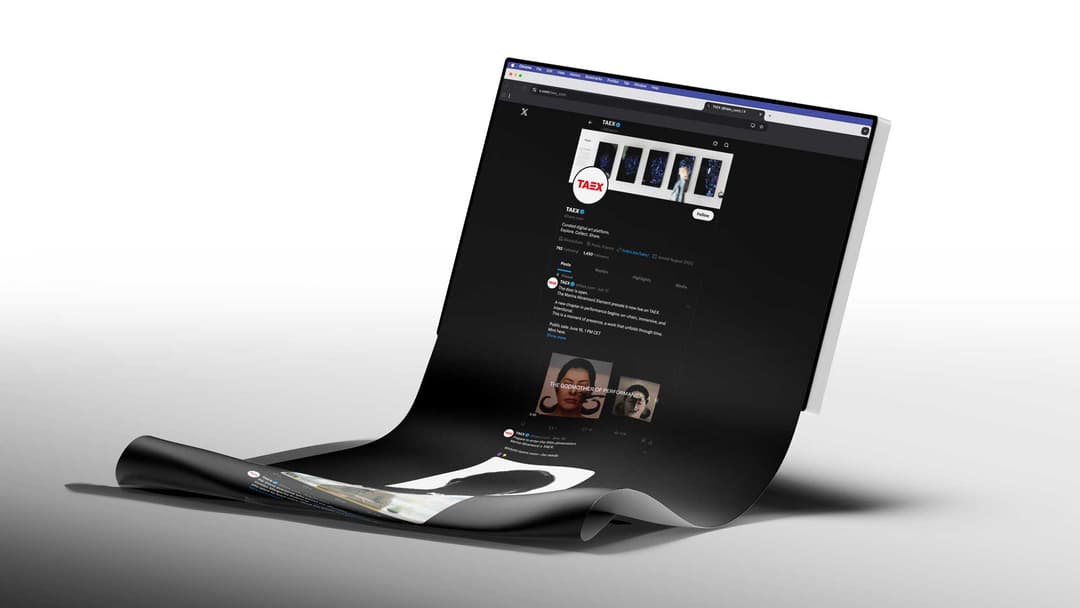
<h3 dir="ltr">Digital art has existed for nearly a century, but it didn’t really become part of our lives until the 2020s. Although we all knew of Rembrandt, Pollock, Warhol etc., there wasn’t a single digital artist who was a household name until extremely recently. Now, many people can comfortably mention names like Refik Anadol and BEEPLE, and even Sasha Stiles, PAK, and Operator, without having to think too hard. </h3> <p dir="ltr">In many ways, today’s digital art market, and perhaps since I am excluding names like Vera Molnar and Aaron Cohen from this argument, I should call it the new digital art market, is quite nascent. A lot of its denizens are quite young, and are receiving tremendous exposure in spaces that perhaps do not have the infrastructure for meaningful critical discourse. What’s worse, fame and notoriety on X often fails to translate to the traditional art world, creating two parallel art markets.</p> <p dir="ltr">Social media does not quite function the way the physical world does when it comes to contemporary art, and the rules of the internet require a different set of skills than that of the physical. I often struggle with the fact that Twitter, or now X, is the primary space for conversations on, or about, digital art. It has been thoroughly distorted since Elon Musk’s acquisition in 2022, <a href="https://www.theverge.com/2024/11/17/24298669/musk-trump-endorsement-x-boosting-republican-posts-july-algorithm-change?utm_source=chatgpt.com">with the algorithm favouring a very specific set of linguistic signals and content</a>. And yes, you could argue that the traditional art world has a liberal bent, but it doesn’t create literal hierarchies of attention the way algorithmic platforms do.</p> <p dir="ltr">The rules for art-world discourse and visibility on X are wildly different. Is being retweeted by an established artist the same as walking into a gallery opening as said artist’s plus one? Does a blue check translate to being on the guest list, even if you paid for it? The parallels, if they can be drawn, are messy (though anthropologically fascinating).</p> <p dir="ltr">One thing that I come back to often is the language requirements of digital environments, in which artists don’t need to have the vernacular to describe their practice, but they do need to talk within the parameters of the digital art world. To the moon, for example, a common rallying cry for many in the NFT space, is openly about the pursuit of wealth. An artist debuting a work of art with this rallying cry is certainly transparent about their priorities and aspirations. They are also less likely to gain traction with any collector or curator interested in deeper motivations.</p> <p dir="ltr">Unfortunately, digital culture does not allow most artists to simply unveil or exhibit, they have to operate within the parameters of the culture. This means artists on X "drop" their works, a word borrowed from streetwear culture that creates a sense of urgency with the intention of creating demand. A drop is inherently commercial, and while there is nothing wrong with that, when the online landscape requires you to create urgency around the work for it to make a statement, the way in which you might have spoken about it if you simply wanted it to exist, changes radically. </p> <p dir="ltr">The traditional world still views NFTs as largely hype over substance. Digital artists and their communities intentionally attempting to create hype around their work does not help. In fact, I can emphatically say, hype is not the path forward.</p> <p dir="ltr">An art gallery also functions as a commercial space, and can create some semblance of urgency to facilitate sales, but it still manages to host culturally meaningful conversations. But by that analogy, there is no museum space in the digital conversation sphere, where someone isn’t chiming in on a thread trying to peddle their wares, as it were. I suppose the point I am trying to make is, can artists present their works on digital platforms like X without the explicit, or implicit, commercial concern? Does it have to be one big grand bazaar, or is it possible for a museum-like digital space to exist within it? Where are the digital kunsthalles?</p> <h3 dir="ltr">Trolls in the Thread</h3> <p dir="ltr">In the digital wild west, social contracts that govern us in physical environments are largely missing. This tends to dilute critical discourse.</p> <p dir="ltr">A digital commercial setting sometimes allows for interlopers. This is both good, and risky. Conversations are not streamlined and linear the way physical conversations are. Interactions are not finite, and so it is much more difficult to have contained, thoughtful discourse. This of course grants a kind of global accessibility to a conversation that in the physical world people might have missed out on. But a thread on X is often disjointed, cacophonic, can be interjected by tweets ranging from MAKE AMERICA GREAT AGAIN to Here’s how I lost 40lbs using this one clever trick doctors won’t tell you. Or worse, can be littered with trolls intentionally attempting to sabotage a conversation, for no reason other than the fact that we have collectively accepted agents of chaos as part of the digital ecosystem.</p> <p dir="ltr">Say what you will about gallery talks, no one turns into a walking billboard or prevents you from literally listening to the artist by grabbing a megaphone and going on a rant halfway through.</p> <p dir="ltr">The price of this no-gates policy, this flexibility, is navigating a space full of arguments, cynicism, ridicule, self-deprecating language, humour (as a defense mechanism), and anonymity. All of these are manageable if you know your way around social media, but do digital artists have to? When did we decide that digital artists have to either endure, or also be good at, shitposting?</p> <p dir="ltr">There is also something so profoundly performative about the culture of tweeting GM into the ether that is almost cult-like, like a bird call but only for a particular set of birds even though everyone can hear it. Whether or not it is actually an innocent and warm greeting intended to build community matters very little when it is attached to the same discourses that focus, overwhelmingly, on sales and wealth. As I mentioned earlier, the physical art world also has its spoken and unspoken rituals, coded language, and barriers to entry. But I’m concerned that in our quest to make everything and everyone so utterly accessible on social media, we have eroded some cultural safeguards and stripped some of these digital spaces of their possibility for meaningful discussion.</p> <p dir="ltr">The result has been a siloing off of the digital art world. Supported largely by the crypto-community, which the traditional art world avoids, digital artists still do not quite coexist with their traditional counterparts. As accessible as it is, the internet is also maze-like in the way it harbors communities, and social media rarely gives you exactly what you are looking for, instead offering you what it thinks you should look at. Most traditional curators, collectors, and artists, simply do not navigate the internet the same way digital artists do. I have no clue how to enter some of these conversations around digital art on X, despite being very much in it, and I can only imagine how difficult it must be for everyone else. For artists daring to venture into any social media beyond Instagram, there is also a language barrier that comes from the required performance of having to cynically put down your own practice before posting about it.</p> <p dir="ltr">The existence of algorithmic digital intermediaries, the extreme accessibility of conversations, the commercially-minded languages around digital art, as well as online culture in general, all contribute to the chasm between the traditional art world and digital art.</p> <p dir="ltr">So how do we bridge this divide?</p> <p dir="ltr">To answer this thorny question, I have decided to interview some friends on how they navigate the digital art world today. Stick around for The Cache № 8.</p> <p> </p>
Kevin Abosch Isn’t Post-Anything
On AI, Ethics, and Synthetic Photography at Paris Photo 2025
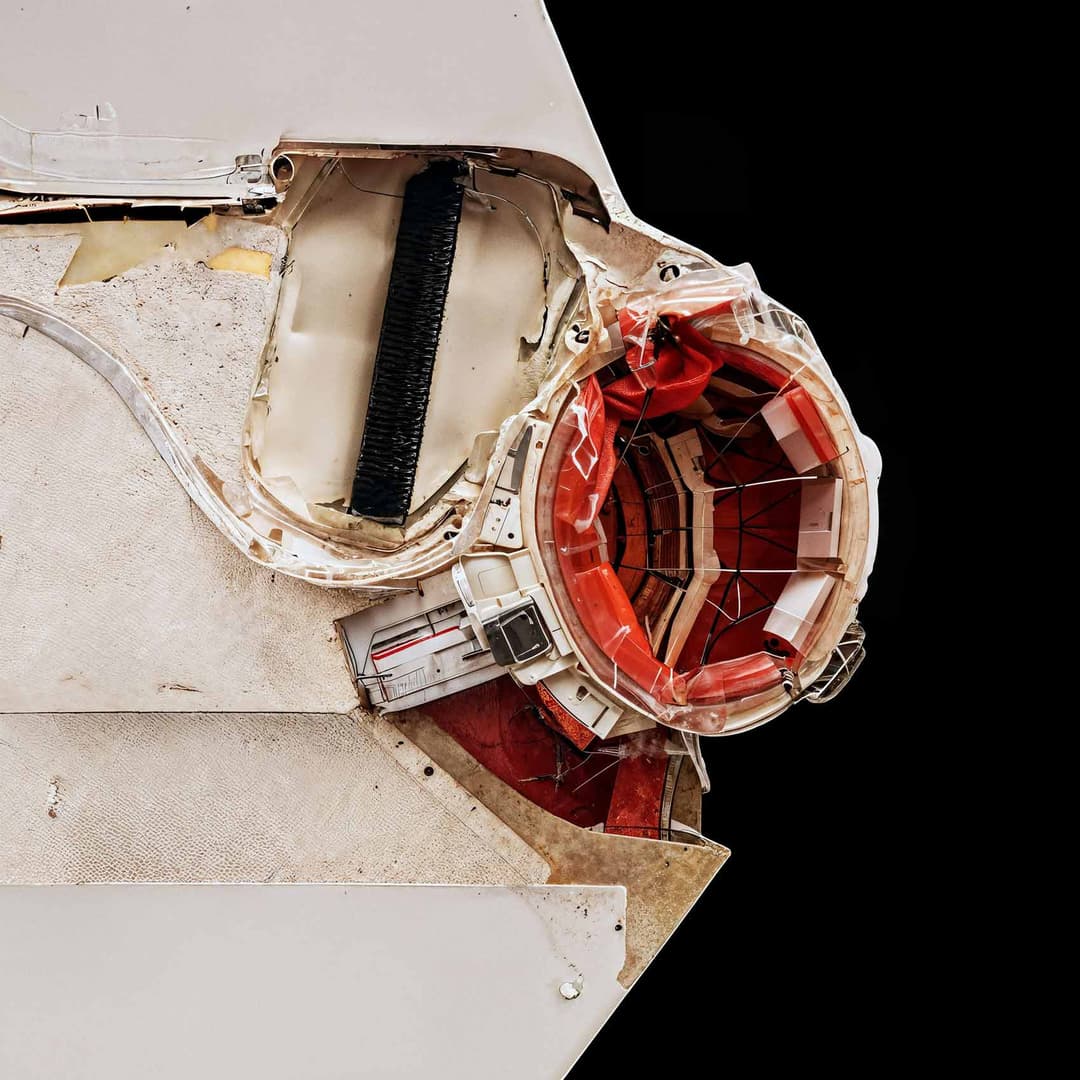
<p dir="ltr">Following his groundbreaking presentation during Paris Photo 2025’s Digital Sector curated by Nina Roehrs, I caught up with Kevin Abosch to talk about his experience presenting AI-generated works of art in the heart of Paris. For those of you unfamiliar with his practice, Abosch is a thoughtful, inventive, and whimsical artist <a href="https://news.artnet.com/market/kevin-abosch-potato-photo-414257">whose photograph of a potato sold for over 1 million USD several years ago</a>. He has since made groundbreaking explorations in AI-generated photography, and had what I would easily consider to be an exemplary presentation in demonstrating intentionality of scale, <a href="https://taex.com/news/70">which I have previously covered in The Cache</a>.</p> <p dir="ltr">Sarp Kerem Yavuz: How would you describe your presentation at Paris Photo to someone who is not familiar with your work?</p> <p dir="ltr">Kevin Abosch: I showed 12 synthetic photographs and 6 synthetic videos, under the title of “Ethical Work.” They are photographic works that I made working with diffusion algorithms, a type of AI that allows one to build a machine’s mental model of what things look like. The model is created by feeding the machine anywhere from thousands to billions of photographic images. I used both proprietary and public models to help generate the images. </p> <p dir="ltr">SKY: How would you describe it to someone very familiar with your work?</p> <p dir="ltr">KA: These works are a response to the ethical discussions that naturally emerge from working with AI. </p> <p dir="ltr">SKY: What was the most commonly asked question during Paris Photo?</p> <p dir="ltr">KA: “How are these photographs made?” Without a comprehensive understanding of the technology used, it’s understandable that many people think the process must be akin to collaging images together, but this couldn’t be further from the reality that is: the machine is learning what things look like in a similar way to how we form mental models. That apple you see in your head, based on a lifetime of looking at apples informs the drawing you make. Now imagine you could generate a mental image of an apple, and print it exactly as you see it in your head. Your skill in copying is a limiting factor that the machine does a better job of escaping from. </p> <blockquote> <p dir="ltr">You can't be “post-” something that’s still unfolding. In contemporary art discourse the prefix “post-“ becomes a way for people to stake territory, rather than a coherent philosophical turn.</p> </blockquote> <p dir="ltr">SKY: Do you think the current terminology around digital art - post-NFT, post-Internet, post-AI etc., sufficiently describes the moment we are living in? </p> <p dir="ltr">KA: You can't be “post-” something that’s still unfolding. In contemporary art discourse the prefix “post-“ becomes a way for people to stake territory, rather than a coherent philosophical turn.</p> <p dir="ltr">AI isn’t an era that concluded; it’s a structuring condition. It’s not like ‘post-war’ or ‘post-industrial.’ It’s closer to electricity or language, something you don’t exit. You integrate it, ignore it, abuse it, or innovate with it, but you don’t move past it.</p> <p dir="ltr">‘Post-AI’ ignores the creative agency of artists actually working with AI.</p> <p dir="ltr">Even if you use ‘post-’ in the sense of ‘critically aware of,’ that doesn’t describe a new epoch. It just describes maturity within the same condition.</p> <p dir="ltr">SKY: Are there categorizations of your work that you disagree with?</p> <p dir="ltr">KA: As an artist who has worked extensively with both photography and machine-learning, I keep finding myself to some extent marginalised until the so-called ‘traditional art world’ catches up. The routine is familiar at this point. I worked with a camera so they called me a photographer. I worked with the blockchain and they called me a crypto-artist. Now because there is so much attention on my synthetic photography, I’m an AI-artist. Nah, I’m an artist — A conceptualist artist. </p> <p dir="ltr">SKY: What is your relationship with social media? How has it evolved since you began your digital art practice?</p> <p dir="ltr">KA: While an early adopter of technology, I have been intentionally disciplined with respect to my public facing self. I tend to be a private person but the data I collect by engaging with the public in measured doses is invaluable in my quest to understand how people ascribe value and see themselves as individuals existing within complex systems. </p> <p dir="ltr">SKY: One of the pieces in your Paris Photo presentation definitely entered David Fincher territory with body horror—could you explain how that piece existed within (or without) the rest of the booth?</p> <p dir="ltr">KA: “Do it Yourself Healthcare,” portrays a person in recovery after having undergone a self-administered open-heart surgery. It’s a bit shocking at first, but it’s also a very mannered and quietly beautiful composition. In the United States and indeed in many parts of the world, if you don’t have adequate health insurance, you die. In this sense, it’s a portrait of surviving a system that doesn’t prioritize the well-being of its citizens. I felt it worked as a companion to ETHICAL WORK and was something visitors of Paris Photo could see and go home feeling they had seen something they had never seen before.</p> <p dir="ltr">SKY: The title of the series, ETHICAL WORK, is highly provocative. What is one ethical dilemma you wish people would resolve your way?</p> <p dir="ltr">KA: Create an ethical framework to live by and live it. Whose ethics? That’s not for me to answer.</p>
Stay Tuned
Be the first to learn about new collections, events, and more.