How digital artists rethink architecture
Major digital artists with diverse backgrounds open new horizons of interdisciplinary art.
related articles
Digital art as a social remedy in solving technologically-induced problems
How digital artists reflect on technologies, our eventual co-existence with them and the changing forms of communication.
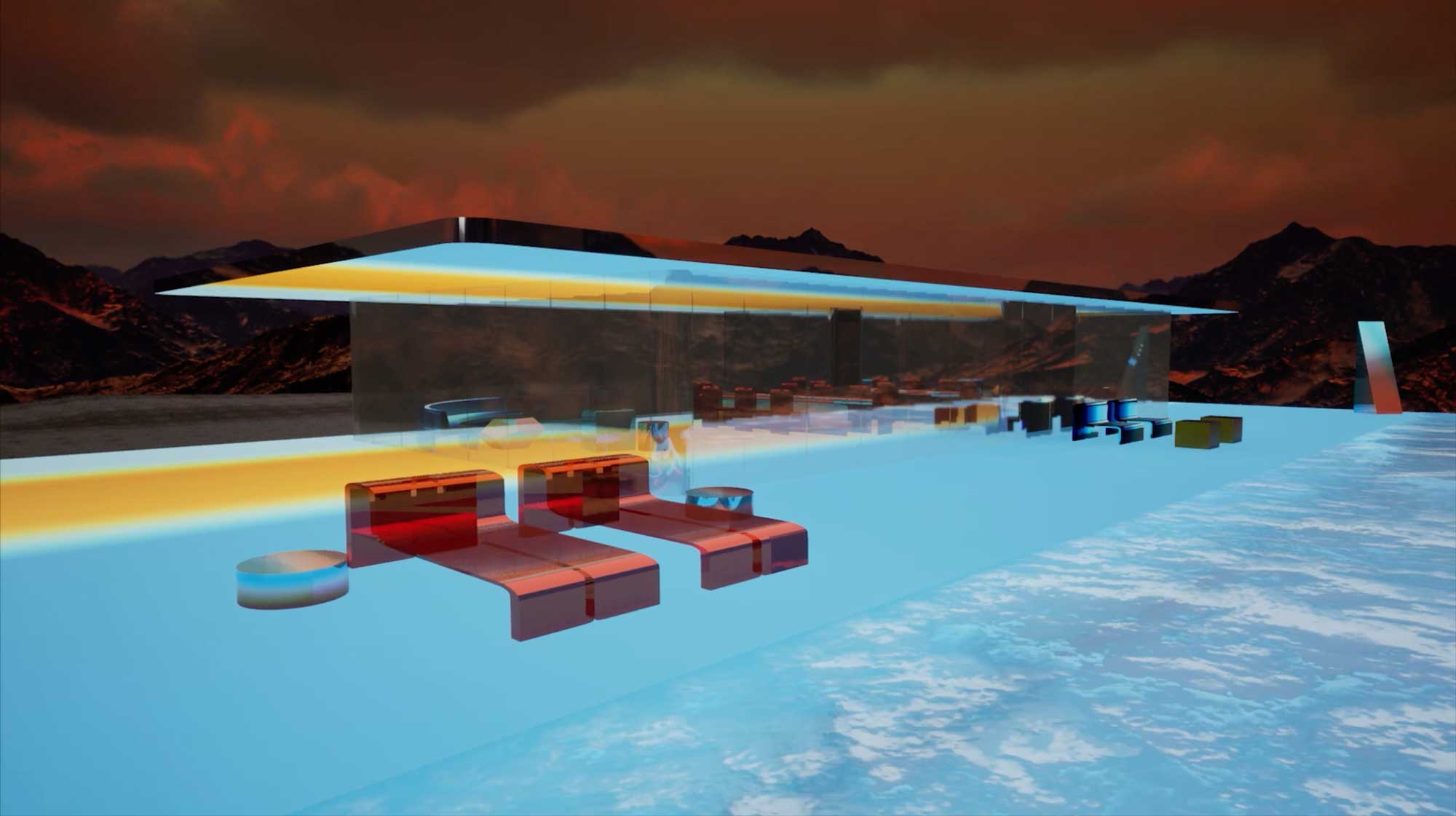
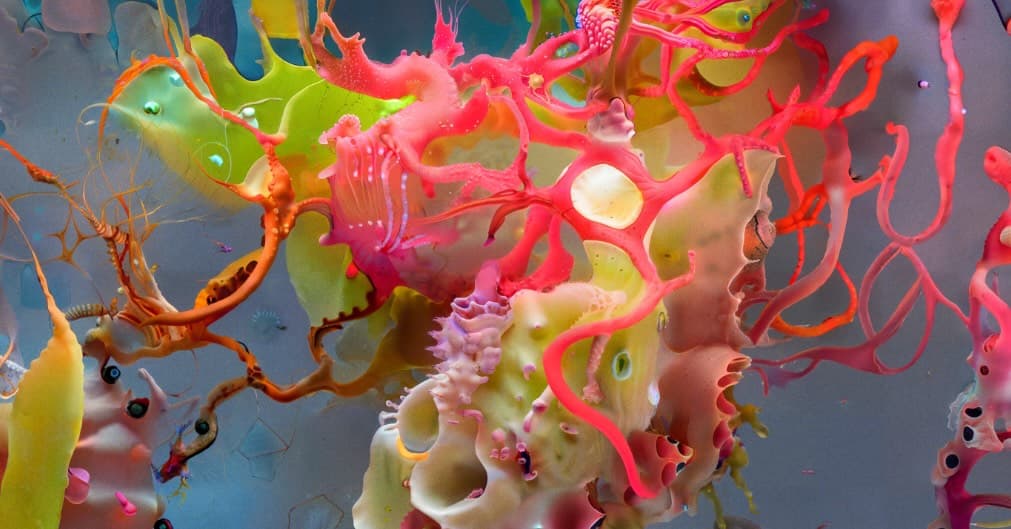
<h4 dir="ltr">Digital technologies make our everyday life easier in many ways. However, excessive use may bring us some struggles such as anxiety from doom scrolling, insomnia, eye strain, and a feeling of social isolation (powered by 5G). At a glance, it could seem that screens and what we see on them are the overbearing evil of today. Hence, one might rightfully question how to “recover” from technologically-induced problems? One of the answers, other than straight-up digital detox, is digital art! </h4> <p dir="ltr"> </p> <p dir="ltr">Let’s face it — the digital world has become an inevitable part of our life, to the point that there is no way back, whether we like it or not. The artists’ goal, as usual, is to conceptualise it on an existential and aesthetic level. This includes artistic reflection on technologically-induced challenges that we’re facing. When some artists ponder the prospects of humans coexisting with technology, others analyse the medium — from software to screens.</p> <p><strong> </strong></p> <h4 dir="ltr">Emotional state</h4> <p> </p> <p><img src="/storage/news-image/cqbskbqrprek5an8pm1g.png" alt="Continuum Collection v.2" width="670" height="350"></p> <pre dir="ltr">Continuum Collection v.2 by Krista Kim. Available to purchase on TAEX</pre> <p><strong> </strong></p> <p dir="ltr">Staying in front of the screens for hours and days may let us lose track of time, get us stressed or anxious. However, the very same screens or augmented reality glasses often serve as a tool of psychological and medical support, certified by ministries of health. Indeed, healthcare gets digitised, and mental well-being is no exception. COVID-19 pandemic followed by a global crisis era only increased the demand for new digital ways of healing. No wonder artists have embraced it as well.</p> <p dir="ltr">Thus, the renowned artist Krista Kim created the digital work Continuum that travels around the globe and was presented in the framework of the last World Economic Forum in Davos. With her shifting abstract minimalist landscape inspired by the Ryoanji Temple Garden in Kyoto she invites each and everyone to take a moment for themselves by offering an environment to mediate. <a href="/news/31/continuum-extended">Currently Continuum is on show at Outernet London</a>, proudly presented by TAEX. Please note that some NFTs from Continuum collection are still <a href="/drop/39">available</a> for collecting on our platform.</p> <p><strong> </strong></p> <h4 dir="ltr">New existence</h4> <p> </p> <p><strong> <img src="/storage/news-image/cqbsku2rprek5an8pm2g.png" alt="Entangled Others" width="670" height="377"></strong></p> <pre dir="ltr">'specious upwellings' by Entangled Others</pre> <p><strong> </strong></p> <p dir="ltr">The eventual cohabitation of humans and non-human entities becomes a focus of artistic reflection. The art group Entangled Others is convinced that it’s not only about coexistence but about the intertwining of these two worlds. “The rich substrate of the uncanny, eerie spaces between us and the non-human world cannot remain as an aesthetic space, our world cannot bear this self-imposed distance and denial of our inter-twined state of us and others”. Entangled Others co-founder Sofia Crespo in her solo work shares the idea that on the ontological level “technologies are a biased product of the organic life that created them and not a completely separated object”.</p> <p><strong><br><br></strong></p> <p dir="ltr">Digital technologies affect our self-perception as well. For an American artist Petra Cortright, the fact of constantly recording and being watched became the subject of her artwork Vvebcam (2007).</p> <p><strong> </strong></p> <p><strong><img src="/storage/news-image/cqbsl3irprek5an8pm30.png" alt="Petra Cortright" width="670" height="483"></strong></p> <pre dir="ltr">Vvebcam, Petra Cortright</pre> <p><strong> </strong></p> <h4 dir="ltr">Inclusive spaces</h4> <p dir="ltr"> </p> <p dir="ltr">Many curators see digital art as a tool to overcome the social boundaries of the traditional art world and to facilitate contact with the audience. As curator Daniel Peace admitted in an interview with TAEX, the development of digital art had “at first a natural progression, but the real dive into everything was when COVID-19 hit. Virtual projects like Discord Club and Clubhouse appeared. The virtuality was part of a lot of panel discussions. During the pandemic, we were not sure that it wouldn't stay forever”</p> <p dir="ltr"> </p> <p dir="ltr">Digital art environments have offered this unique opportunity to bring together renowned artists and underrepresented ones.<strong><br></strong></p> <p dir="ltr"> </p> <p dir="ltr">Facing a digital era, artists are rethinking self-perception, communication patterns and conceptualising the new existence of organic and artificial entities. Where will this new cultural age take us? Hopefully, to a place of progress, minus the eye strain. </p> <p><strong><br><br><br></strong></p> <pre dir="ltr">Visuals on cover: 'specious upwellings' by Entangled Others</pre> <p> </p>
Digital path of Venice Biennale
A recap of digital art representation at Venice Biennale over the last half of the century.
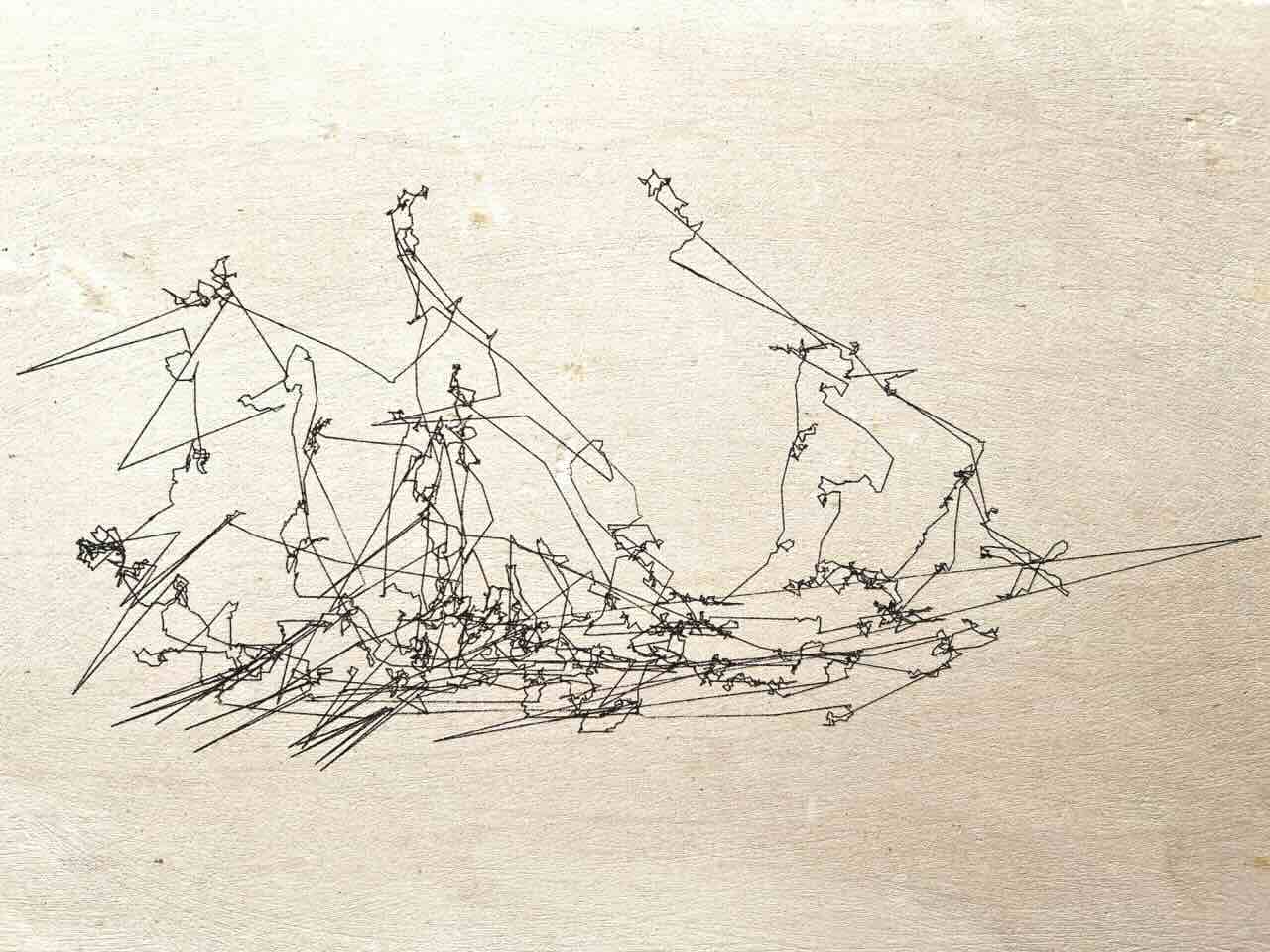
<p dir="ltr">Throughout decades the Venice Biennale has been witnessing and hosting various steps of digital art in its evolution. In the 1960s, the Venice Biennale prize was awarded to the international network and movement New Tendencies created in Zagreb in 1968, which according to scholars Jussi Parikka and Darko Fritz was at the time “the only long-term initiative” that “started to contextualise digital art within contemporary art with a historical discourse”.</p> <p dir="ltr"> </p> <p dir="ltr">Later on in 1970, 35th Venice Biennale was featuring computer art by showing <em>Running Cola</em> by a Japanese collective of art and engineering students The Computer Technique Group founded by Masao Kohmura and Haruki Tsuchiya, which according to Jussy Parrika and Darko Fritz were believed to be “one of the earliest examples of the computer image morphing technique”. Descendants of the post-war generation, they were positioning themselves as a think tank aiming to “deliberate carefully the relationships between human beings and machines” by a “strategic collaboration with artists, scientists” without falling into praising or criticising the computer era.</p> <p dir="ltr"> </p> <p dir="ltr">In 1986, when the Venice Biennale was focused on art and science, the presence of digital media, in the framework of <em>Laboratoria Ubrica</em> curated by Roy Ascott, Tom Sherman, and Tommaso Trini presented <em>Planetary Network</em>, which was a worldwide computer network–slow-scan TV project with participants from all over the world. The pictures and faxes that were created in the process were then exchanged between different continents and the texts were sent via the medium of ARTEX. The project was questioning the very principles of an established art system of museums and galleries. Its results, as Ascott later mentioned in his book <em>Das Gesamtdatenwerk</em> (1989) “broadened the scope and possibly the nature of individual creativity” by activating “a whole stream of interactive communications media” including “electronic mail, computer conferences, videotext, slow scan TV” and various kinds of interfaces.</p> <p dir="ltr"> </p> <p dir="ltr">In the early 2000s, the Venice Biennale was among major art events that according to the philosopher and specialist on digital art Hervé Fischer ‘reignited the debate over the state of the arts’ and the return of traditional and digital arts towards craftsmanship.</p> <p dir="ltr"> </p> <p dir="ltr">The 59th Biennale in 2022 celebrated a new milestone of digital art by featuring 200 NFT artworks at the Decental Art Pavillion. <em>The Digital Odyssey </em>summed up the preliminary results of the development and transformation of digital art over the past almost six decades since mid 1960s. That year's Biennale definitely inscribed artificial intelligence and phygitals into the context of contemporary art.</p> <p dir="ltr"> </p> <p dir="ltr"><img src="/storage/news-image/cqv0da2rprek5an8pn70.png" alt="Artwork by Matthew Attard" width="670" height="377"></p> <pre dir="ltr"><em> Will Follow The Ship</em> by Matthew Attard, 2024</pre> <p dir="ltr"> </p> <p dir="ltr">However, as <a href="https://www.theartnewspaper.com/2024/04/17/venice-biennale-2024-the-must-see-pavilions-in-the-arsenale">noticed</a> by art critics, the current 60th Biennale of 2024 lacks a visible input of digital art, with an exception of Malta pavilion project <em>I Will Follow The Ship</em> by Matthew Attard curated by Elyse Tonna and Sara Dolfi Agostini. Attard’s artwork lies on the intersection between the physical and digital realms. He even <a href="https://www.labiennale.org/en/art/2024/malta">shares</a> the credits of the project with a machine—an eye-tracker. By comparing old anonymous ship drawings with contemporary digital drawing Attard invites us to reflect on the shifts of power in the era of latest computer technologies.</p> <p dir="ltr"> </p> <p dir="ltr">Reflecting the contemporary era, the Venice Biennale has made several attempts to approach digital art over more than half a century, sometimes in juxtaposition with different disciplines. One way or another, digital art, constantly changing predicates and names, is as imminent as climate change, and its waves have already reached the threshold of the exhibition halls.</p> <p dir="ltr"> </p> <h4 dir="ltr">Read more:</h4> <p> </p> <p><img src="/storage/news-image/cqv0bdarprek5an8pn50.png" alt="Histories of Post-Digital: 1960 and 1970s Media Art Snapshots" width="670" height="1202"></p> <pre dir="ltr"><br>Histories of Post-Digital: 1960 and 1970s Media Art Snapshots<br>Jussi Parikka, Darko Fritz. Edited by Ekmel Ertan.<br>The catalogue of the exhibition curated by Ekmel Ertan and Darko Fritz, took place at Akbank Sanat between 17th December 2014 and 21st February 2015.<br><br><br><img src="/storage/news-image/cqv0bsqrprek5an8pn5g.png" alt="At a Distance. Precursors to Art and Activism on the Internet" width="670" height="856"><br><br><br></pre> <pre dir="ltr">At a Distance. Precursors to Art and Activism on the Internet<br>Edited by Annmarie Chandler and Norie Neumark.<br>2005 Massachusetts Institute of Technology, 2005.</pre>
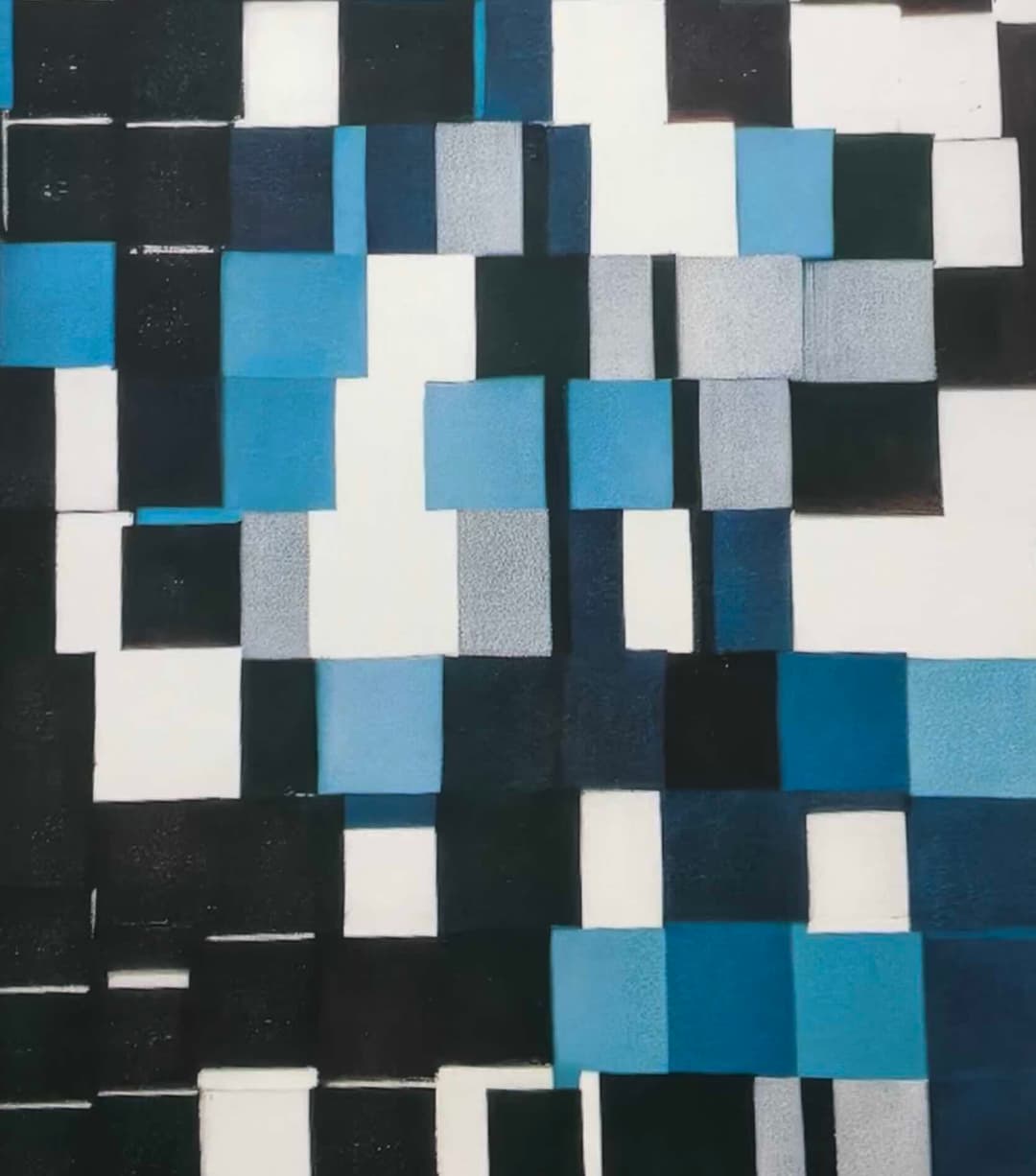
Algorithmic art: from graphical and kinetic to digital
We encounter algorithmic art much more often than we may think. Ornamentation, kinetic art and digital generative art share common structures, grounds, and concepts. More about them—in our new column.
<h3 dir="ltr">When we hear about algorithms today, the first things that come to mind are AI and machine learning, social network feeds and advertisements. In one way or another everything that has to do with algorithms is strongly associated with computers. So would it be truthful to say that algorithmic art is always related to computers? Spoiler—not at all. Algorithmic art has a way longer history than we could have imagined.</h3> <p dir="ltr">Algorithms lie in the core of calculation, regardless if they’re performed by a human or a machine. Being a series of steps they lead toward the resolving of a problem or getting a result. So what makes an artwork an algorithmic one is, in fact, the principle of calculated evolution and/or repetition. Of course, we can always dig deeper as Johanna Drucker did by writing that “the algorithmic condition of computationally generated work is merely the case that demonstrates a general condition. Works of art, be they literature, music, visual, or performance pieces, are instances of rule sets. They manifest the possibilities of the conditions for their production.”</p> <p dir="ltr">Whether it is the linear perspective, Golden Ratio or a Fibonacci sequence that underlines an artwork, it is based on algorithms. So each time you see ornaments of the Islamic Golden Age, Renaissance frescoes or visionary architecture graphics by Piranesi or Escher—all of it is indeed algorithmic per se.</p> <p dir="ltr"><img src="https://cdn72109500.ahacdn.me/news/upload-470446613.jpeg" alt="" width="1024" height="683"><br>M.C. Escher, Day and Night, 1938</p> <p dir="ltr">It appears that algorithms do not always have to be executed by artists themselves and could be redirected to the audience. Christiane Paul pointed out that the “instruction- and rule-based practice” was taking an important place in various art movements including Dada, Fluxus and conceptualism as they had focused on the conceptual and participatory side of the artworks. For instance “score events” by Yoko Ono from her Grapefruit book 1964, or Marina Abramović Method cards (2022) by Marina Abramović are in fact algorithms designed for the audience to perform.</p> <p dir="ltr">The major moment when algorithmic art entered the world of digital art (and one of the first pieces of digital art itself) was in the 1960s when such pioneering artists as Vera Molnár, Frieder Nake and Manfred Mohr started to do digital drawings via plotters, based on mathematical functions. This new approach led in 1965 to the two first-ever exhibitions of “computer art”, as it was called at that time. Under the umbrella of digital art, both algorithmic and generative aspects were reunited. Being one of the first generative artists, Vera Molnár brought algorithms throughout her eight-decade career and reached the first major digital auctions.</p> <p dir="ltr">Meanwhile, kinetic and optical art focused on the contemplation of the movements and light was emerging. Based on mechanisms or computer software a significant part of kinetic art is algorithmic as well.</p> <p dir="ltr"><img src="https://cdn72109500.ahacdn.me/news/upload-2679330610.jpeg" alt="Victor Vasarely, Feny, 1973, image: artblart.com" width="1107" height="1103">Victor Vasarely, Feny, 1973, image: <span class="s1">artblart.com</span></p> <p dir="ltr">Within the rapid evolution of computer software and technologies and the AI boom starting from the 1980s to this day, algorithmic art has become more immersed in digital art. An art project aurèce vettier by Paul Mouginot who creates graphics, sculptures and installations using algorithms as a source of “raw material expanding conceptual possibilities and complementing the initial knowledge of art history”. Aurèce vettier explores the borders between the physical and virtual worlds.</p> <p dir="ltr"><img src="https://cdn72109500.ahacdn.me/news/upload-2855706148.jpg" alt="AD.VM.AV.IA, aurèce vettier x Vera Molnár, photo: Marc Domage: " width="1089" height="553"><br>AD.VM.AV.IA, aurèce vettier x Vera Molnár, photo: Marc Domage</p> <p dir="ltr">Refik Anadol, known worldwide for his site-specific three-dimensional data sculptures and digital paintings, uses machine learning algorithms to create abstract artworks. This year he opened Dataland—the first museum focused entirely on AI art. Krista Kim creates abstract digital algorithms as well, but, in her case, she reconsiders the modern state of this tool in everyday life. “Algorithms are everywhere, and they are controlling what we see through social media platforms, "sharing" and "liking" has created a narcissistic and egocentric society that is lacking in humanity and authenticity. It is our very "connectedness" on social media platforms that is diminishing real human connection”, she wrote ten years ago in her Techism manifesto. By turning this tool upside down, Krista turns all the disadvantages of algorithms into healing artworks.</p> <div class="interactive-block">283</div> <p dir="ltr">Alper Derinboğaz, an architect and digital artist used algorithmic modelling tools to process geological data for his project Neogene. The curiosity towards movement continues to capture the minds of digital artists, following their kinetic predecessors, including MAOTIK and IX Shells. Known as well as Itzel Yard, IX Shells created an educational group Creative Code Art, focused on algorithmic and generative art, using her background in Architectural Technology and Computer Science.</p> <div class="interactive-block">244</div> <p dir="ltr">Whether it is a captivating pattern, a sequence of movements or the funding core of generative art, algorithms play a significant role in contemporary art, both traditional and digital. With the evolving technology in art, algorithms are taking more room in the global art sphere. The question is— where will they take the art community?</p>
Stay Tuned
Be the first to learn about new collections, events, and more.